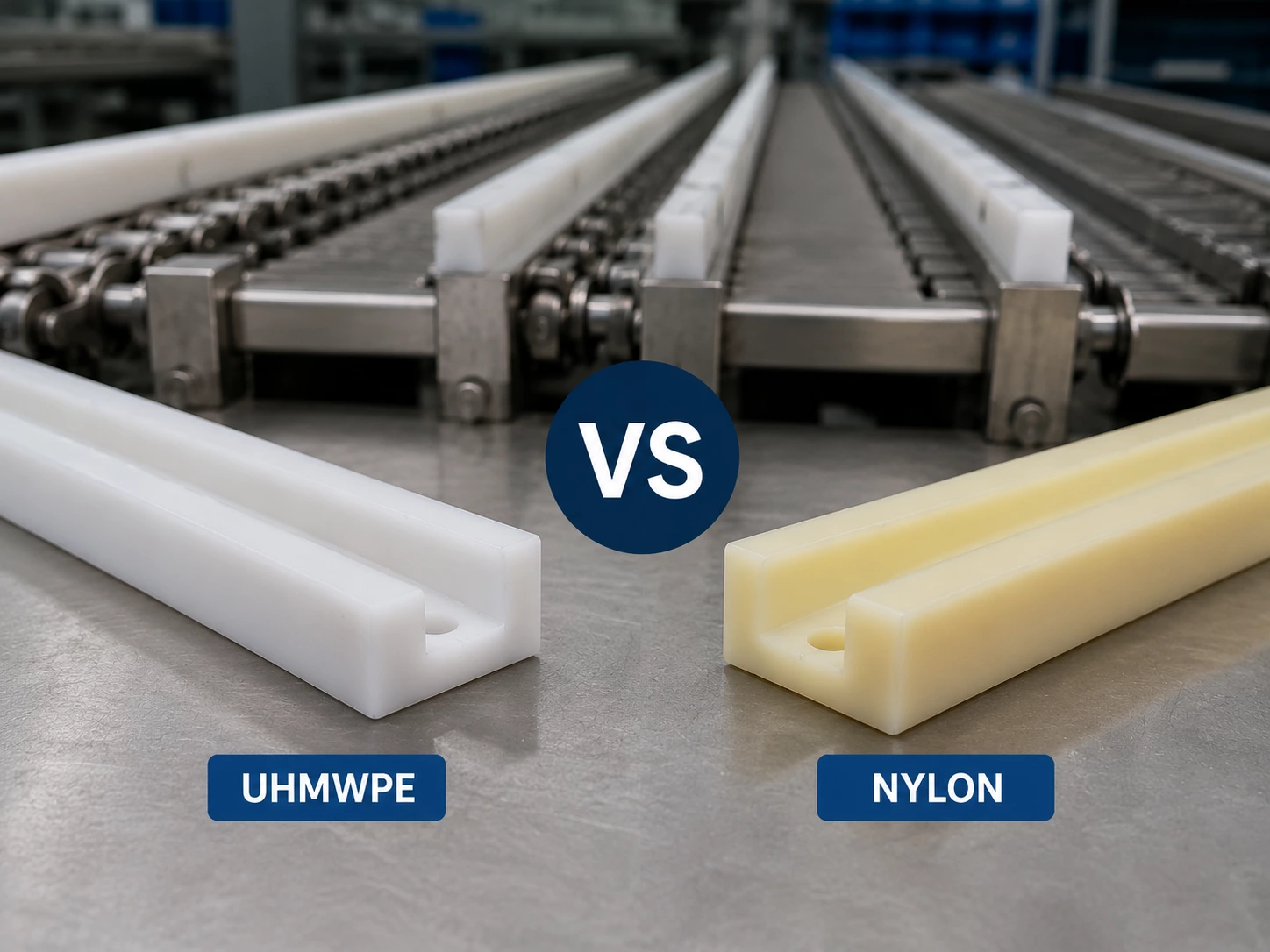
UHMWPE vs Nylon: Which Plastic Performs Better in Conveyor Systems?
Selecting the right material for conveyor components is critical to ensuring smooth operation, minimizing maintenance, and maximizing equipment lifespan. Among the most commonly used engineering plastics in conveyor systems, UHMWPE (Ultra High Molecular Weight Polyethylene) and Nylon are two popular choices.
Both materials offer excellent performance compared to traditional metal components, but they differ significantly in wear resistance, friction properties, moisture absorption, impact strength, and overall suitability for specific conveyor applications.
This article compares UHMWPE and Nylon to help engineers, maintenance managers, and purchasing professionals determine which material performs better in conveyor systems.
Understanding UHMWPE and Nylon
UHMWPE is a highly durable polyethylene with an extremely long molecular chain structure. It is widely recognized for its exceptional wear resistance, low coefficient of friction, and outstanding impact strength.
Nylon, also known as Polyamide (PA), is an engineering plastic valued for its mechanical strength, rigidity, and load-bearing capability. It is frequently used in gears, rollers, bushings, and structural machine components.
While both materials are used in conveyor applications, their performance characteristics make them suitable for different operating conditions.
Wear Resistance Comparison
Wear resistance is often the most important consideration when selecting conveyor components.
Conveyor chains, belts, and products continuously slide across guide rails and wear strips, generating friction and surface wear.
UHMWPE is widely regarded as one of the most wear-resistant thermoplastics available. In many sliding applications, it can outperform Nylon by a significant margin.
Key advantages of UHMWPE include:
- Excellent abrasion resistance
- Reduced surface wear
- Longer service life
- Lower replacement frequency
For conveyor wear strips, chain guides, and guide rails, UHMWPE generally provides better long-term durability.
Winner: UHMWPE
Friction Performance
Low friction helps conveyors operate more efficiently by reducing drag and minimizing chain wear.
UHMWPE has a naturally low coefficient of friction, making it one of the most self-lubricating engineering plastics.
Benefits include:
- Smoother chain movement
- Reduced energy consumption
- Lower operating noise
- Less wear on conveyor chains
Nylon performs well but typically exhibits higher friction compared to UHMWPE.
In high-speed conveyor systems, this difference can have a noticeable impact on maintenance costs and operational efficiency.
Winner: UHMWPE
Impact Resistance
Conveyor systems often experience shock loads, product drops, and sudden impacts.
UHMWPE is known for its exceptional toughness and impact resistance, even at low temperatures.
Unlike some engineering plastics that become brittle under stress, UHMWPE can absorb significant impact energy without cracking.
Nylon offers good toughness but generally cannot match the impact performance of UHMWPE in harsh environments.
Industries such as mining, bulk material handling, and heavy-duty conveying often prefer UHMWPE for this reason.
Winner: UHMWPE
Mechanical Strength and Load Capacity
When it comes to stiffness and structural strength, Nylon has a clear advantage.
Nylon provides:
- Higher tensile strength
- Greater rigidity
- Better dimensional stability under load
- Improved load-bearing performance
This makes Nylon an excellent choice for:
- Conveyor rollers
- Bearings
- Gears
- Structural machine components
If a component must support significant mechanical loads, Nylon may be the better option.
Winner: Nylon
Moisture Absorption
One important difference between these materials is their response to moisture.
UHMWPE absorbs very little water, allowing it to maintain dimensional stability in humid or wet environments.
Nylon, however, is hygroscopic and can absorb moisture from the surrounding environment.
Excessive moisture absorption may lead to:
- Dimensional changes
- Reduced stiffness
- Potential fitting issues
For food processing plants, washdown environments, and outdoor conveyor systems, this characteristic can be particularly important.
Winner: UHMWPE
Chemical and Corrosion Resistance
Many conveyor systems operate in environments exposed to cleaning chemicals, oils, and industrial contaminants.
UHMWPE offers excellent resistance to:
- Most chemicals
- Acids
- Alkalis
- Moisture
- Corrosion
Nylon performs adequately in many industrial environments but is generally more susceptible to chemical attack and moisture-related changes.
For aggressive operating conditions, UHMWPE often provides superior long-term reliability.
Winner: UHMWPE
Noise Reduction
Noise reduction is increasingly important in modern manufacturing facilities.
Because of its low friction and vibration-dampening properties, UHMWPE helps create quieter conveyor systems.
Benefits include:
- Reduced chain noise
- Lower vibration levels
- Improved workplace comfort
Nylon can generate more operational noise due to its higher surface hardness and friction characteristics.
Winner: UHMWPE
Typical Conveyor Applications
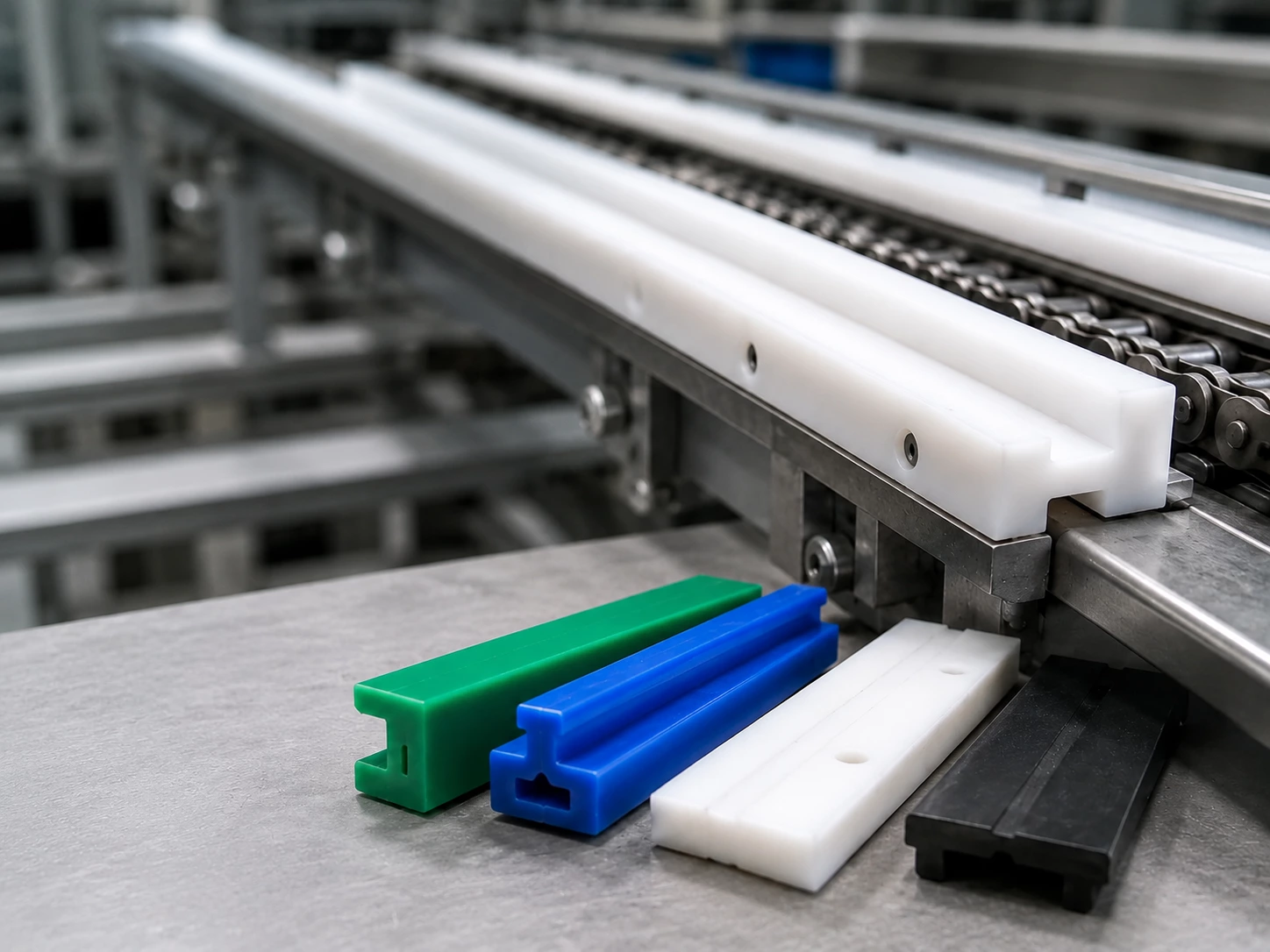
Common UHMWPE Conveyor Components
- Conveyor wear strips
- Chain guides
- Guide rails
- Side guides
- Chute liners
- Hopper liners
- Conveyor wear pads
Common Nylon Conveyor Components
- Conveyor rollers
- Sprockets
- Bushings
- Bearings
- Gear components
- Structural support parts
In many conveyor systems, both materials are used together because they serve different purposes.
Cost Considerations
Material cost varies depending on grade, dimensions, and manufacturing requirements.
While Nylon may offer advantages in structural applications, UHMWPE often delivers lower total ownership costs in sliding wear applications due to:
- Longer service life
- Reduced maintenance
- Fewer replacements
- Lower downtime
When evaluating conveyor performance over several years, UHMWPE frequently provides better overall value.
Conclusion
Both UHMWPE and Nylon are high-performance engineering plastics, but they excel in different areas.
If your application involves sliding contact, chain movement, wear strips, guide rails, or conveyor guides, UHMWPE is generally the superior choice due to its outstanding wear resistance, low friction, impact strength, and moisture resistance.
If your application requires higher structural strength, rigidity, or load-bearing capacity, Nylon may be the better solution.
For most conveyor wear components, guide systems, and material handling applications, UHMWPE consistently delivers longer service life, lower maintenance costs, and improved operational efficiency, making it the preferred material for modern conveyor systems.